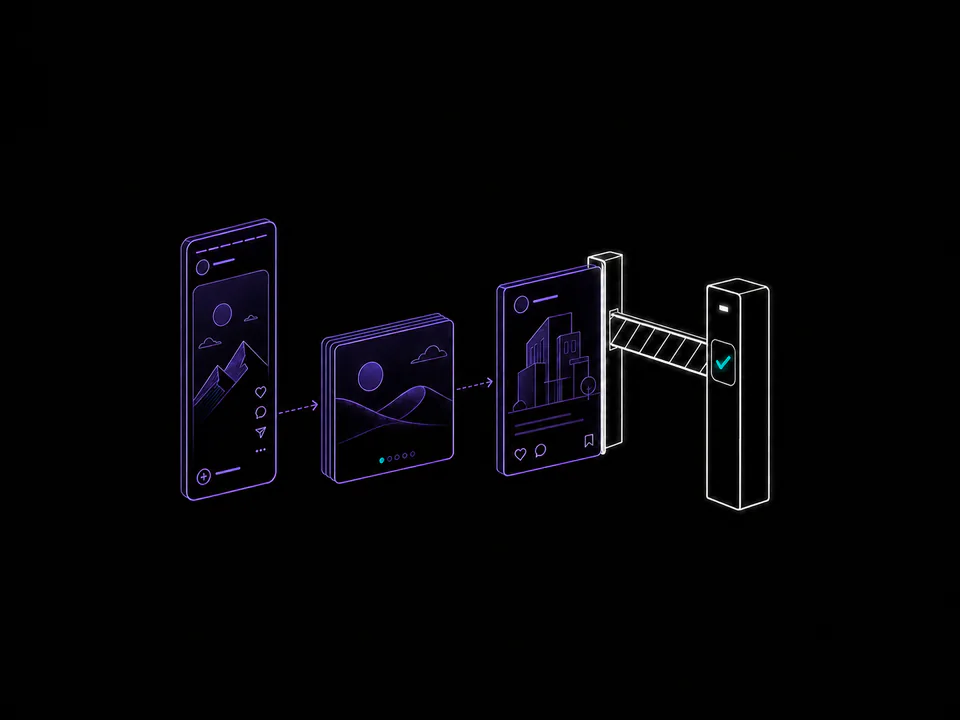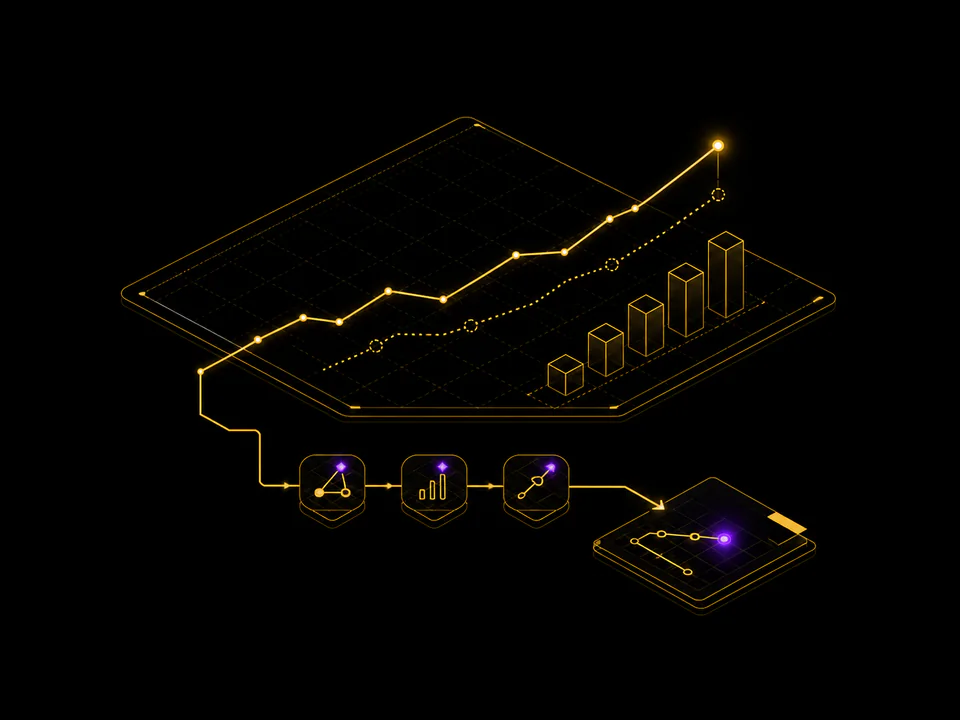

Proactive AI understands a goal, watches the right signals, acts inside agreed boundaries, and knows exactly when a human should take over.
Beyond the prompt box
Most AI products begin with an empty field. The user supplies the timing, the context, and the instruction; the model supplies an answer. That can be powerful, but it leaves the work of remembering and restarting with the person.
A proactive agent begins somewhere else: with an outcome that persists. For a content team, that outcome might be a useful month of Instagram posts published at the right hours. The agent keeps that outcome in view even after the first conversation ends.
This does not mean unlimited autonomy. It means the system can recognize the next safe action without asking the user to restate the entire job.
The four parts of useful initiative
Initiative becomes useful only when it is paired with context and constraint. We look for four capabilities in any workflow that calls itself proactive.
- A durable goal: the agent knows what finished looks like across more than one session.
- A clock and a trigger: it knows when to begin, check, wait, or try again.
- A bounded action space: it can move quickly inside explicit brand and publishing rules.
- A handoff rule: it can identify the decisions that still belong to a person.
Memory needs a purpose
An agent should not remember everything. It should remember the details that make the next decision better: preferred language, disallowed claims, recurring formats, approval edits, audience response, and the shape of the current campaign.
Purposeful memory turns a stack of isolated generations into a system. The Writer can use what the Reader learned. The Publisher can use what the team approved. The Analyst can compare the forecast with the result and feed that signal into the next brief.
Trust is visible, not implied
A trustworthy agent shows its work at the moments that matter. You should be able to see what it plans to do, why the action is due, which source informed it, and whether the action can still be changed.
The best control surface is calm most of the time. It becomes prominent at the boundary: an unfamiliar claim, a new campaign direction, or the final approval before something public goes live.
That balance is the product. Too many interruptions turn the agent back into a prompt box. Too few make automation feel mysterious. Proactive software earns room to act by making its boundaries legible.
A practical test
Remove yourself from the workflow for a day. Does the system know what is due, prepare the next useful unit of work, and surface only the decision that genuinely needs you? If it merely waits on a dashboard, it is not proactive yet.
The goal is not to take people out of creative work. It is to remove the avoidable remembering, carrying, and checking that surrounds it. People keep the taste and the final say. The agents keep the momentum.
Three ideas to carry forward.
- 01
Give the agent a persistent outcome, not a chain of disconnected prompts.
- 02
Define the safe action space before asking for more autonomy.
- 03
Make handoffs and reasons visible wherever trust could break.